The rise of quantum computing introduces significant challenges to existing cryptographic systems. Quantum algorithms, such as Shor’s and Grover’s, have the potential to compromise widely used asymmetric and symmetric cryptographic methods, including RSA, DSA, Diffie-Hellman, and Elliptic Curve Cryptography (ECC). These vulnerabilities demand a proactive response to safeguard sensitive data and infrastructure.
Post-Quantum Cryptography (PQC) encompasses a suite of cryptographic algorithms engineered to withstand quantum-based attacks while operating efficiently on classical computing platforms. These algorithms leverage mathematical foundations designed to resist quantum threats, including:
Current State of Preparedness
Many organizations remain in the preliminary stages of preparing for the post-quantum transition. Critical systems, such as digital certificates, VPN tunnels, digital signatures, and key management frameworks, predominantly rely on RSA and ECC, which are vulnerable to quantum attacks. In 2022, the National Institute of Standards and Technology (NIST) initiated standardization of PQC algorithms, endorsing CRYSTALS-Kyber for key exchange and encryption, and CRYSTALS-Dilithium for digital signatures. By 2024, some organizations have started testing these algorithms and crafting transition strategies, but the process remains complex, resource-intensive, and long-term.

Regulatory and Policy Landscape
To navigate the shift to a post-quantum cryptographic framework, organizations must adopt a comprehensive strategy that includes:
Effective planning for the post-quantum era hinges on several key considerations:
The shift to PQC extends beyond software to hardware infrastructure:
HSMs, critical for secure key generation and storage, will undergo significant changes:
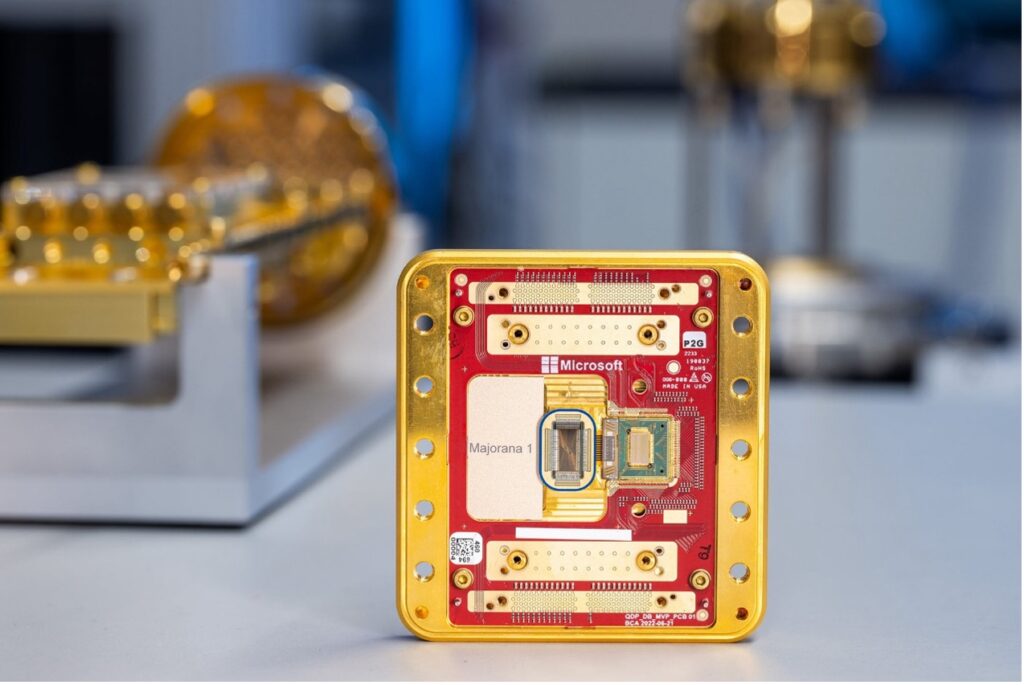
Microsoft has unveiled its Majorana 1 quantum chip. © John Brecher for Microsoft
In 2024, Microsoft announced its entry into quantum hardware development through the “Azure Quantum Elements” program, introducing a prototype quantum chip based on topological qubit architecture. This approach prioritizes stability, error tolerance, and scalability, offering a robust foundation for quantum computing. Integrated with Microsoft’s software and cloud infrastructure, the “Quantum-as-a-Service” model aims to deliver hybrid classical-quantum computing via Azure, enabling enterprises to leverage quantum technology.
Comparing Quantum Hardware Initiatives
| Company | Technology Base | Approach | Notes |
| Microsoft | Topological Qubit | Scalable, error-tolerant design | Long-term focus, high security |
| IBM | Superconducting Qubit | 1000+ qubits, supported by Qiskit | Strong software ecosystem |
| Superconducting Qubit | Quantum supremacy (Sycamore) | High-density hardware, rapid testing | |
| IonQ | Trapped Ion | Stable, high-precision operations | Commercialization-focused |
| PsiQuantum | Photonic Qubit | Scalable quantum computing | Laboratory-stage development |
Microsoft’s investment signals that quantum computing is no longer a distant threat but a present reality, urging organizations to accelerate their PQC adoption across both software and hardware. If companies like Microsoft are starting to produce hardware, it signals a transformative turning point in the world of cryptography.
The impact of quantum technologies on cryptography is not just a theoretical threat—it is a rapidly materializing reality. This new era requires organizations not only to adapt to technology but also to reposition themselves in terms of strategic resilience.
At Netsmart, we closely follow global developments in post-quantum cryptography and implement a comprehensive strategy to ensure our clients are prepared for this transformation through our solution partners and product portfolio.
With our advanced key management solutions, HSM integrations, certificate lifecycle management platforms, and product sets ready for hybrid encryption infrastructures, we analyze our clients’ cryptographic inventories, plan transition scenarios together, and ensure maximum security with minimal disruption at the application layer.
Additionally, through continuous training programs, PoC studies, and product compatibility tests conducted with our partners, we enable organizations to manage this technological transformation in a healthy and sustainable manner.
Netsmart acts with a vision that builds not only today’s but also tomorrow’s security. As your companion in the transition to the post-quantum era, we are ready to build a more resilient, more secure, and better-prepared digital future together.


The rise of quantum computing introduces significant challenges to existing cryptographic systems.

In today’s post we’ll explain how to simulate Active Directory attacks using Splunk and various tools to improve an organization’s security posture.

In this blog post, we will cut through the confusion and explain the core differences between SIEM and SOAR, two essential security tools used to protect your organization.

The privileged accounts of organizations play an important role in today’s cybersecurity ecosystem. Protecting these accounts and the critical resources they access has become crucial for organizations to manage, control, and audit all privileged account activities.